Monday, March 14, 2011

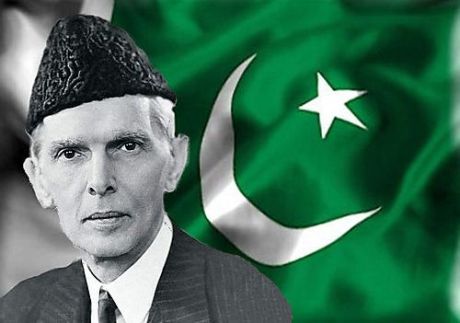
Quaid-i-Azam Mohammad Ali Jinnah

Quaid-i-Azam Mohammad Ali Jinnah, the voice of one hundred million Muslims, fought for their religious, social and economic freedom. Throughout history no single man yielded as much power as the Quaid-i-Azam, and yet remained uncorrupted by that power. Not many men in history can boast of creating a nation single handedly and altering the map of the world but Jinnah did so and thus became a legend.


7 Reasons to Be Happy Even if Things Aren’t Perfect Now


by Lori Deschene

“Being happy doesn’t mean that everything is perfect. It means you’ve decided to look beyond the imperfections.” -Unknown
Even though I couldn’t possibly care less about oil-based raincoats, I listened to him talk for about 15 minutes one rainy morning last week.
This little guy, with his colorful button-down shirt and funny-looking hat makes my day most mornings. He works at the 7-11 where I get my coffee. And he always seems happy.
At first I thought he was just putting on a good face, making the best of a tough situation. After all, he couldn’t possibly enjoy working at a convenience store, right? Then I realized I was missing the biggest part of his appeal: he does enjoy his job, and that’s why he seems so happy—because he is.
Man that’s awesome. I aim to be like him.
My life doesn’t always look exactly like I want it to. I spend many days writing alone in my living room, when I’d rather work from a beachside office space I share with friends. I drive a beat-up old Toyota, when I’d far prefer something that doesn’t have roll-up windows or a cassette player.
But the world doesn’t change all that much if I have more money, a different space, a better job, or a nicer car. The wrapping paper is different, but the gift inside stays the same.
The way I feel about myself; how much I open myself to new people and experiences; how often I choose to smile simply because it feels good. None of these things depend on my life situation. Colorful shirt guy knows that. I suspect he knows these things, too:

Sunday, March 13, 2011

The Holy City of Madinah

Madinah


Madinah, officially al-Madīnah al-Munawwarah (the radiant city)) is a city in the Hejaz region of western Saudi Arabia which lies 447 kilometres north of the Holy City of Makkah. It It is the second holiest city in Islam.

It was to Madinah that the Prophet Muhammad, peace be upon him, and his followers, faced by the hostility and persecution of the Makkhan merchants, departed in 622 AD - and, when the citizens of Madinah asked the Prophet to live amongst them and to arbitrate in their affairs (an invitation taken to mean their rejection of polytheism and submission to the will of the one God, Allah), it was in Madinah that the Islamic era began.

The second-holiest site in Islam, the Prophet's Mosque in Madinah contains the chamber in which the Prophet Muhammad is buried

Madinah is also the place in which the Prophet Muhammad, peace be upon him, was buried.
Muslim Community in New Zealand

Located in the South Pacific, New Zealand is a country of about 60 million sheep but only around 4 million people, of which about 40 thousand are Muslims.


The first Muslims arrived here in 1868. They were of Chinese origin involved in the mining industry. When the industry declined they returned without leaving any Muslim heritage behind. The next Muslims for permanent residence came in 1908 in Auckland. It was, however, from 1950 onwards that sizeable numbers of Muslims began establishing a firm foothold in this country, which is known by the indigenous Maori people as "Aotearoa" - Land of the Long White Cloud.


These first Muslims, although small in number, soon began to organize themselves and gather in their private homes to observe salaat, Qur'an classes and religious celebrations. As their number grew the need for a larger and fixed place of worship and education became more pressing. Thus, ordinary houses were bought and converted into Islamic Centers in all major cities throughout the country.

Saturday, March 12, 2011

Paris on the Nile

Paris on the Nile
cairo

Cairo (Arabic: القاهرة transliteration: Al-Qāhirah), which means "The Vanquisher" or "The Triumphant", is the capital city of Egypt. It is the largest city in Egypt and Africa's most populous city. The origin of Al-Qahirah is said to come from the appearance of the planet Mars during the foundation of the City of Cairo. Cairo is the sixteenth most populous metropolitan area in the world. It is also the most populous metropolitan area in Africa.
Cairo was founded by the Fatimid caliphs as a royal enclosure, and replaced Fustat as the seat of the government. It later came under the Mamluks, ruled by the Ottomans 1517 to 1798, briefly occupied by Napoleon. Muhammad Ali of Egypt made Cairo the capital of his independent empire from 1805 to 1882, after which the British took control of it until Egypt attained independence in 1922.
Today, Greater Cairo encompasses various historic towns and modern districts into one of the most populous cities in the world. It is an amazing city full of life and movement, and it is that way almost 24 hours every day, with the noisy honking of horns, children playing in the streets and merchants selling their wears and services. And here, the Egyptians are most at home in this powerful, modern and ancient city.
cairo
 A journey through Cairo is a virtual time travel: from the Pyramids, Saladin's Citadel, the Virgin Mary's Tree, the Sphinx, and Heliopolis, to Al-Azhar, the Mosque of Amr ibn al-A'as, Saqqara, the Hanging Church, and the Cairo Tower. It is the Capital of Egypt, and indeed its history is intertwined with that of the country. Today, Cairo's official name is Al-Qahira (Cairo), although the name informally used by most Egyptians "Masr" (Egyptian Arabic name for Egypt), from the original name of Egypt's first Arab capital Fustat, Misr al-Fustat, "City of the Tents."

LinkWithin

Related Posts with Thumbnails