By:
Sajid Iqbal
Today we have some Muslims who believe the role of Muslims is only to oppose and speak out against oppression by being politically active. They oppose and ridicule Muslims who don't do this. They despise Muslims who just want to focus on being better Muslims by purifying themselves from sin and evil. They ridicule Muslims who focus on just worship like prayer, zikr and religious rituals.
We also have some Muslims who believe the role of Muslims is only to become better Muslims by becoming closer to God and purifying themselves from sin and evil. They focus on prayer, remembrance of God, increasing their knowledge about Islam. They don't believe in politics. They don't believe or promote the idea of being politically active, to speak out against oppression and persecution, to defend the Deen from Islamophobia and speak out against occupation and attacks against the Ummah.
Both are following Islam selectively. They are not following the teachings and practise of the Prophet (pbuh) completely. If they did they would know that the role of the Muslims is to do BOTH:
1) Speaking out against oppression, persecution, occupation and being politically active to defend the deen is COMPULSORY.
2) Becoming a better Muslim, a practising Muslim, praying, acts of worship, purifying yourself from sin, increasing knowledge of the Deen and being a walking, talking advert for Islam is also COMPULSORY.
**IT'S NOT ABOUT ONE OR THE OTHER. IT'S COMPULSORY TO DO BOTH**
Showing posts with label Muslims. Show all posts
Saturday, October 12, 2013
Tuesday, September 3, 2013
Do Christians, Muslims and Jews worship the same God?
Opinion by Jeffrey Weiss, Special to CNN
(CNN) – Sunni and Shia Muslims are killing each other in several nations, most notably in Syria's escalating civil war.
Coptic Christians churches are being torched in Egypt.
In Israel, what passes for peace talks has restarted after years of murder and brutality.
Religion is a common thread in each conflict. But why? Don’t these folks worship the same deity?
After all, Jews, Christians and Muslims all trace their faiths back to a fellow named Abraham, whom they all claim was chosen for special treatment by the Almighty. Why can’t they all get along?
Not academic
The “same God” question is one theologians have hammered at for as long as there have been enough religions for the query to make sense.
(CNN) – Sunni and Shia Muslims are killing each other in several nations, most notably in Syria's escalating civil war.
Coptic Christians churches are being torched in Egypt.
In Israel, what passes for peace talks has restarted after years of murder and brutality.
Religion is a common thread in each conflict. But why? Don’t these folks worship the same deity?
After all, Jews, Christians and Muslims all trace their faiths back to a fellow named Abraham, whom they all claim was chosen for special treatment by the Almighty. Why can’t they all get along?
Not academic
The “same God” question is one theologians have hammered at for as long as there have been enough religions for the query to make sense.
Monday, June 3, 2013
LOVE AND HATRED – PART 1
by mthago
Allah has created us because He wants us to love Him. Allah gives us many orders to be followed by us with the intention only to please Allah until Allah is pleased with us. Allah orders us to love Allah, those who are loved by Allah and to love all the other creations of Allah. Allah has never order us to hate anyone, any race or any religion. Who are the peoples who are loved by Allah? The peoples who are loved by Allah are those who obey all the orders of Allah with the intention only to please Allah until Allah is pleased. How would we know that Allah loves a person? The peoples who are loved by Allah are those who have the quality of humbleness or tawa’dhu. Allah is Great. There is no one who is Great except Allah. A person who thinks that he or she is great is a person who is away from Allah and not loved by Allah. A person who is humble or tawa’dhu will have good characters. A person, through who, good come to other peoples is a good person. A person who always does good to other peoples, even to those who do evils to him or her is a good person. Good or bad comes only from Allah. Allah showers His blessing to the entire mankind through a man whom Allah has chosen to become the mean to spread His blessing to the entire mankind. The persons who are chosen to be the mean to spread the blessing of Allah to the entire mankind are known as the Prophets. Prophet Muhammad is one of the men who is chosen by Allah to become the mean for Allah to shower His blessing to the entire mankind and to the other creations of Allah. Allah has mentioned in the Quran with the approximate meaning; we have not sent you oh Muhammad except as a blessing to the entire mankind. What is mean by the words; a blessing to the entire mankind? The blessing to the entire mankind means is the correct lifestyle of the Prophet Muhammad saw, which when practiced by the entire men, will ensure men to have a life of blessing which is full of happiness in this world and the hereafter.
Good or evil come only from Allah. There is no one who is able to give good and evil except Allah. Allah does only good. Allah never does any evil or bad action. Good or bad comes only from Allah. Allah gives good when men are doing good action and Allah gives evil when men are doing evil action. Wars that exist between men are evil and the evil come from Allah. War and peace come from Allah. Allah is the one who gives peace to men and Allah is the one who gives war to men. Allah is the one who gives good and Allah is the one who gives evil to men. What men should do in order to make Allah gives good to them? Men must do good actions then Allah will give good to men. Good actions are the mean upon which Allah will give good to men and evil actions are the mean upon which Allah will give evil to men. Allah is the one who gives good or evil to men. Allah decides to give good or bad to men according to the actions of men. Men are given the choice either to do good or to do bad actions. When men choose to do bad actions, Allah will give men the permission to do evil actions. When men choose to do good actions, Allah will give men the permission to do good actions.
Allah has created us because He wants us to love Him. Allah gives us many orders to be followed by us with the intention only to please Allah until Allah is pleased with us. Allah orders us to love Allah, those who are loved by Allah and to love all the other creations of Allah. Allah has never order us to hate anyone, any race or any religion. Who are the peoples who are loved by Allah? The peoples who are loved by Allah are those who obey all the orders of Allah with the intention only to please Allah until Allah is pleased. How would we know that Allah loves a person? The peoples who are loved by Allah are those who have the quality of humbleness or tawa’dhu. Allah is Great. There is no one who is Great except Allah. A person who thinks that he or she is great is a person who is away from Allah and not loved by Allah. A person who is humble or tawa’dhu will have good characters. A person, through who, good come to other peoples is a good person. A person who always does good to other peoples, even to those who do evils to him or her is a good person. Good or bad comes only from Allah. Allah showers His blessing to the entire mankind through a man whom Allah has chosen to become the mean to spread His blessing to the entire mankind. The persons who are chosen to be the mean to spread the blessing of Allah to the entire mankind are known as the Prophets. Prophet Muhammad is one of the men who is chosen by Allah to become the mean for Allah to shower His blessing to the entire mankind and to the other creations of Allah. Allah has mentioned in the Quran with the approximate meaning; we have not sent you oh Muhammad except as a blessing to the entire mankind. What is mean by the words; a blessing to the entire mankind? The blessing to the entire mankind means is the correct lifestyle of the Prophet Muhammad saw, which when practiced by the entire men, will ensure men to have a life of blessing which is full of happiness in this world and the hereafter.
Good or evil come only from Allah. There is no one who is able to give good and evil except Allah. Allah does only good. Allah never does any evil or bad action. Good or bad comes only from Allah. Allah gives good when men are doing good action and Allah gives evil when men are doing evil action. Wars that exist between men are evil and the evil come from Allah. War and peace come from Allah. Allah is the one who gives peace to men and Allah is the one who gives war to men. Allah is the one who gives good and Allah is the one who gives evil to men. What men should do in order to make Allah gives good to them? Men must do good actions then Allah will give good to men. Good actions are the mean upon which Allah will give good to men and evil actions are the mean upon which Allah will give evil to men. Allah is the one who gives good or evil to men. Allah decides to give good or bad to men according to the actions of men. Men are given the choice either to do good or to do bad actions. When men choose to do bad actions, Allah will give men the permission to do evil actions. When men choose to do good actions, Allah will give men the permission to do good actions.
Thursday, April 19, 2012
Mohamed is the most Influential man in history
|
Non-Muslims say that, when they are thinking and using the scientific approach. Let us read …
|
Michael H. Hart is a Jewish American astrophysicistand he is the writer of the famous book “The 100: A Ranking of the Most Influential Persons in History”which has sold more than 500,000 copies and been translated into 15 languages.
The
said book was not directed to Muslims but Hart chose prophet Mohamed
because he believes that prophet Mohamed peace be upon him was the only
Man in history who was supremely successful on both the religious and secular levels.
In
his book hart says about the reason behind choosing the prophet as
number one in the list:”My choice of Muhammad to lead the list of the
world's most influential persons may surprise some readers and may be
questioned by others, but he was the only man in history who was
supremely successful on both the religious and secular levels.Of humble
origins, Muhammad founded and promulgated one of the world's great religions, and became an immensely effective political leader.
Today, thirteen centuries after his death, his influence is still
powerful and pervasive.”
In
comparison with the rest of men in the list, Hart says about Mohamed
peace be upon him: “The majority of the persons in this book had the
advantage of being born and raised in centers of civilization, highly
cultured or politically pivotal nations. Mohammad, however, was born in
the year 570, in the city of Mecca, in southern Arabia, at that time a
backward area of the world, far from the centers of trade, art, and
learning”.

Prophet
Mohammad was born in southern Arabia, at that time a backward area of
the world, far from the centers of trade, art, and learning.
Hart
continues his talking about the history of the prophet by saying:”Most
Arabs at that time were pagans, who believed in many gods. There were,
however, in Mecca, a small number of Jews and Christians “.
Friday, February 3, 2012
A RELIGIOUS AND TOLERENT SOCIETY
by mthago
A religious society means a society that moves forward in adopting the way of life commanded by Allah. Allah wants the entire humankind to be successful in their life in this World and Hereafter. In order to ensure the success of humankind, Allah has given the entire humankind a way of life. The Prophet Muhammad SAW has shown this way of life and whoever follows that way of life will be successful. The way of life of Prophet Muhammad SAW begins with the work of enjoining good and forbidding evil and performing five times daily prayers. The males are obligated to perform five times daily prayers with congregation in the mosque and the females are obligated to perform the daily prayers in their houses with the children. A religious society is a society that enjoins people to good and forbids them from evil and steadfast in observing prayers to Allah. With these two main orders of Allah, the way of life of the Prophet Saw will gradually become the way of life of the Muslims. The society will move gradually and steadily to become a religious society. When the Muslims begin to practice these two main orders of Allah, the other orders of Allah will begin to establish in the community. These two main orders of Allah were commanded to the Muslims when they were in Mecca. The other three main orders of Allah (Fasting, Zakat, and Hajj) were commanded to the Muslims when they were in Medina. That society in Medina was a religious and tolerant society and that society came into existence when the Muslims persistently observed the two main orders of Allah while they were in Mecca; the work of enjoining good and forbidding evil and performing five times daily prayers with congregation.
Saturday, December 24, 2011
Sunday, July 24, 2011
Daughters, a matter of pride
Bringing up children with proper care is the primary duty of Muslim parents. Parents should not distinguish in a discriminatory manner between their male and female children when bringing them up. However, the fact remains that girls in many Muslim communities are the victims of their parents’ bias against them.
If parents have any right to be biased, it should be in favor of girls. Almighty Allah mentioned girls first before mentioning boys while referring to His sovereign control over the universe and creation of human beings in the chapter Al-Shura (Poets).
“To God belongs the dominion of the heavens and the earth. He creates what He wills (and plans). He bestows female (offspring) upon whom He wills, and bestows male (offspring) upon whom He wills. Or He bestows both males and females, and He leaves barren whom He wills: for He is full of Knowledge and Power.” (Verses 49 & 50)
The Prophet Muhammad (peace be upon him), has clearly demonstrated that a girl is not a matter of humiliation to a family. On the other hand, she is a matter of pride. A man who brings up his daughters in a proper way will be among those who have the honor of standing close to the Prophet (pbuh) on the Day of Judgment.
Wednesday, April 6, 2011
My message
My message
Today, i just want to forward an important message to Muslims who want to settle in FRANCE. Unfortunately, i was born and grow in FRANCE. In this country, we can observed with the time that Muslims are not really welcome. Few months ago, the french government forbidden the wearing of the niqab(cover the full face).
Next year, they prepared a second banning of the bhurka ...
If they do that, they will probably forbidden the wearing of the Hijab !!!!!
Everyday, in my prayers i asked to ALLAH(swt) : "settle me as soon as possible in INDIA ". Why INDIA : there is all my family, we can practise ISLAM without problem... Wear bhurka and cover our face face without problem.
Read more : Me and Islam as a western girl !!(my true story)
Today, i just want to forward an important message to Muslims who want to settle in FRANCE. Unfortunately, i was born and grow in FRANCE. In this country, we can observed with the time that Muslims are not really welcome. Few months ago, the french government forbidden the wearing of the niqab(cover the full face).
Next year, they prepared a second banning of the bhurka ...
If they do that, they will probably forbidden the wearing of the Hijab !!!!!
Everyday, in my prayers i asked to ALLAH(swt) : "settle me as soon as possible in INDIA ". Why INDIA : there is all my family, we can practise ISLAM without problem... Wear bhurka and cover our face face without problem.
The big changement on me :
_ I'm always cool ( i can be angry very very rarely)
_ 100% happy
_ Feel more better
_ Become more modest
_ Even if doctors don't know what i have (knee problem wich no one saw it before), I don't take it serious, i just think : "ALLAH(swt) know the best for us ...
Just try to read the QURAN and pray regularly you will see the changement yourself : you will be cool, tolerant, etc. Then you will thank ALLAH(swt) for this changement !!!!
Something in your life will make trust on ISLAM, and something else will make you strong on your faith(ISLAM)
Insha'allah i'm going to try to wear the bhurka ...
Yours M.Shameena
Read more : Me and Islam as a western girl !!(my true story)
Wednesday, March 2, 2011
A plan for minority development
By Moosa Raza,
The main minorities in India are Muslims and Christians. At the all-India level, Muslims form close to 15% of the population. There are other minorities like Sikhs and Jains but they are dominant minorities. But among all the Minorities, both in terms of education, economic development and share in both public and private services, Muslims are at the bottom of the ladder. They are the deprived minorities; their share in the national cake is far less than their population warrants.
Statistics have been analysed by the Sachar Committee, I cannot refrain from highlighting only a couple of them.
According to Census data, while about 7% of the population aged 20 years are graduates or hold technical diplomas, this proportion is less than 4% among Muslims, and less than 1% have technical education.
Only 3.6% of Muslims are graduates. 25% of Muslims children in the 6-14 age group have either never attended school or have dropped out. A majority of these are girls. That is why more than 50% of Muslim women are classified among illiterates, even by the minimalist definition of literacy – mere reading and writing and arithmetic.

The main reasons behind this large gap in womens literacy are:
1. The large scale illiteracy among mothers especially in rural areas. Hence, they are unable to educate their children at home.
2. Absence of all-girl schools within easy reach for girls.
3. Absence of transport arrangements to go to school.
4. Economic necessity of retaining girls to look after younger siblings.
5. Demand for dowry by the bridegroom and his family, which the economically depressed cannot afford.
6. Finding well educated grooms for educated girls of equivalent level.
7. The feeling that if one has to choose between spending your meager resources on educating a boy or a girl, the cost/benefit ratio goes in favour of the son.
8. Absence of girls hostels and safe transport for college girls specially in the uncertain security scenario.
The main minorities in India are Muslims and Christians. At the all-India level, Muslims form close to 15% of the population. There are other minorities like Sikhs and Jains but they are dominant minorities. But among all the Minorities, both in terms of education, economic development and share in both public and private services, Muslims are at the bottom of the ladder. They are the deprived minorities; their share in the national cake is far less than their population warrants.
Statistics have been analysed by the Sachar Committee, I cannot refrain from highlighting only a couple of them.
According to Census data, while about 7% of the population aged 20 years are graduates or hold technical diplomas, this proportion is less than 4% among Muslims, and less than 1% have technical education.
Only 3.6% of Muslims are graduates. 25% of Muslims children in the 6-14 age group have either never attended school or have dropped out. A majority of these are girls. That is why more than 50% of Muslim women are classified among illiterates, even by the minimalist definition of literacy – mere reading and writing and arithmetic.

1. The large scale illiteracy among mothers especially in rural areas. Hence, they are unable to educate their children at home.
2. Absence of all-girl schools within easy reach for girls.
3. Absence of transport arrangements to go to school.
4. Economic necessity of retaining girls to look after younger siblings.
5. Demand for dowry by the bridegroom and his family, which the economically depressed cannot afford.
6. Finding well educated grooms for educated girls of equivalent level.
7. The feeling that if one has to choose between spending your meager resources on educating a boy or a girl, the cost/benefit ratio goes in favour of the son.
8. Absence of girls hostels and safe transport for college girls specially in the uncertain security scenario.
Saturday, February 19, 2011
Islam & Muslims in Germany
Islam is the largest religious community in Germany after the Christian denominations. The German Islamic Conference aims to promote dialogue and integration
The vast majority of Muslims are well-integrated into the life of German society.
Source :Read more..
The 3.3 million Muslims in Germany constitute roughly 4% of the population and come from some 40 different countries. By far the largest group of Muslims, 2.6 million people, come from Turkey; they are followed by Moroccans, Afghans and Iranians. Approximately 800,000 Muslims hold German citizenship. Germany has roughly 3,000 mosques and places of worship for Muslims.
The vast majority of Muslims are well-integrated into the life of German society.
Source :Read more..
Thursday, January 13, 2011
Reclaiming The Quran - Original Meaning and Understanding
The Majestic Reading: "Quran" The Quran, "The Reading," is a confirmation of the Torah and the Bible, and it affirms, confirms and repeats the Faith and Law that was sent in them both. The Faith and the Law that were sent in them have been corrupted. The Arabic Quran, which cannot be adulterated, has today been surrounded by absolute lies attributed to Mohammad outside the Quran and usually referred to as "Ahadith" or "Stories". The Quran, which is The Story, is absolutely self sufficient in explaining itself, otherwise it would be from other than God. The Quran confirms what has passed before and points to what is to come. Two major events, first a Punishment will come, then the Hour when the earth, sun, and moon as we know it will cease to exist.
http://www.themajesticreading.com
http://www.quranexplorer.com/quran/
Wednesday, January 5, 2011
British Muslim Convert Population Has Doubled in the Past Ten Years
The number of Britons choosing to become Muslims has nearly doubled in the past decade, according to one of the most comprehensive attempts to estimate how many people have embraced Islam.
Up to 100,000 converts to Islam are living in the UK,according to a report published today for Faith Matters organisation..
Using a number of sources, including a survey of more than 250 British mosques, census data from 2001 and conversion figures in Europe, the researchers from Swansea University estimate that there could be as many as 100,000 converts - of all ethnic backgrounds - in the UK, with white women leading the growing number of people embracing the Muslim faith.
By comparison, the report estimates that the Muslim convert population of Britain may have been a mere 60,000 people in 2001.
First, by using data from the Scottish 2001 census - the only survey to ask respondents what their religion was at birth as well as at the time of the survey - researchers broke down what proportion of Muslim converts there were and then extrapolated the figures for Britain as a whole.
Then, study by Kevin Brice, of Swansea University found 5,200 people converted to Islam in the UK last year.
Also, a survey was conducted of 122 converts last year which showed 56% were white British, with women making up 62% of respondents. The average age at conversion was just over 27.
The majority of the converts reported difficulties after converting because of the negative attitude of their family, but over time this attitude became more "positive" according to the report.
The majority of the converts saw themselves as both British and Muslim and did not feel disillusioned with British society and culture.
But they also felt their own lives had been "lost" and were "lacking in purpose" before conversion, and feared that there was a "normalisation" of "immoral" behaviour amongst an increasingly less religious British public.
Only a very small minority saw celebrating birthdays, listening to music or reading fiction as prohibited by Islam, with fewer than 10% viewing attending a family Christmas dinner as forbidden.
A majority said that most or all of their close friends were Muslims but almost all felt that Muslims should not keep themselves separate from non-Muslims.
Read more : British Muslim Convert Population Has Doubled in the Past Ten Years
Source : http://en.islamtoday.net/artshow-229-3908.htm
Tuesday, November 30, 2010
The Best Story on the History of Islam I have ever read.

Here are couple of examples where I was lacking:
1. How is it that Islam that was started by one man, in a little town in Saudia Arabia, exploded to 1.5 billion? There are Muslims and mosques where ever you go. From China and Japan right through Europe and America. From all the way North in Canada to the Southern parts of Africa there are devout Muslim communities that any Muslim can find himself home in. What exactly happened for the numbers to swell like this in short span of just 20 generations?
2. I had first heard of the Crusades when I was ten, in Walt Disney’s Robin Hood. But what were the Crusades? When did it happen? Why was it such a big deal?
3. Me and Ali are great fans of Sufi Literature (duh :-). But how and when did the Sufis come about. We hear the illustrious names of Rabia Basri, Ibn Arabi, Mevlana Rumi, Al-Hallaj, Kabir, but who came first, who came second etc. What spawned their coming? We hear some were revered and others persecuted. Why? The great Mevlana Rumi spoke and wrote in Farsi, then why is he buried in Turkey?
4. I often hear of the Golden Age of Islam. The Age where Muslims Scholars, excelled in Geography mapped the world, exceeded in Mathematics, excelled in Optometry so much that they even performed successful Cartact Surgeries! But when did these take place. What happened to bring about their decline in these sciences.
5. Historically, Islam was never Extremist. It was the more accommodating and tolerant of religions. What gave rise to the hard-lined ideologies practiced in Afghanistan, Kingdom of Saudia Arabia and parts of Pakistan?
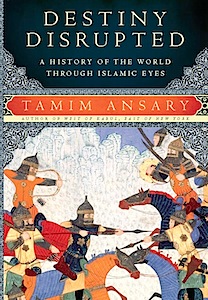
I had all the above questions and tonnes more answered in the engaging narrative by Aga Tamim Ansary in his brilliant book Destiny Disrupted. An unbiased account from the birth of Islam 1400 years ago right through the various Caliphate regimes, covering the Mongol Raids as well as the Glory days of the Moghuls right down till the 2003 invasion of Iraq. I don’t think there’s a country or major event in the tale that Aga Ansary has left uncovered. The writing style is fluent, engaging and at times witty one just eagerly keeps flipping the pages to know what happened next. It’s certainly not a book only for Muslims. It’s for all those who have had the above questions and were curious on any aspect on the History of Islam.
If you are ever in a bookshop, ask for Destiny Disrupted. It may be a difficult find. But if you do get it in your hands, do open the book anywhere in the middle and read till the end of that page. If you find yourself drawn into the story, go ahead and buy the book. All of it is really that good.
Source : http://www.vakil.orgThe Best Story on the History of Islam I have ever read.
Wednesday, November 10, 2010
Importance of Greeting in Islam
Praise be to Allah. All people have the custom of greeting one another, and every group has its own distinctive greeting that distinguishes them from other people.
The Arabs used to greet one another with the words “An’im sabaahan” or “An’imu sabaahan” [equivalent to “Good morning” – Translator], using words derived from “al-ni’mah”, which means good living after the morning. The idea was that because the morning is the first part of the day, if a person encounters something good in the morning, the rest of the day will be good too.
When Islam came, Allaah prescribed that the manner of greeting among Muslims should be “Al-salaamu alaykum,” and that this greeting should only be used among Muslims and not for other nations. The meaning of salaam (literally, peace) is harmlessness, safety and protection from evil and from faults. The name al-Salaam is a Name of Allaah, may He be exalted, so the meaning of the greeting of salaam which is required among Muslims is, “May the blessing of His Name descend upon you.” The usage of the preposition ‘ala in ‘alaykum (upon you) indicates that the greeting is inclusive.
Ibn al-Qayyim said in Badaa’i’ al-Fawaa’id (144):
“Allaah, the Sovereign, the Most Holy, the Peace, prescribed that the greeting among the people of Islam should be ‘al-salaamu ‘alaykum’, which is better than all the greetings of other nations which include impossible ideas or lies, such as saying, ‘May you live for a thousand years,’ or things that are not accurate, such as ‘An’im sabaahan (Good morning),’ or actions that are not right, such as prostrating in greeting. Thus the greeting of salaam is better than all of these, because it has the meaning of safety which is life, without which nothing else can be achieved. So this takes precedence over all other aims or objectives. A person has two main aims in life: to keep himself safe from evil, and to get something good. Keeping safe from evil takes precedence over getting something good…”
The Prophet (peace and blessings of Allaah be upon him) made spreading salaam a part of faith. Al-Bukhaari (12, 28 and 6236), Muslim (39), Ahmad (2/169), Abu Dawood (5494), al-Nisaa’i, (8/107) and Ibn Hibbaan (505) narrated from ‘Abd-Allaah ibn ‘Umar that a man asked the Messenger of Allaah (peace and blessings of Allaah be upon him): “What is the best thing in Islam?” He said, “Feeding others and giving the greeting of salaam to those whom you know and those whom you do not know.”
Ibn Hajar said in al-Fath (1/56):
“i.e., do not single out anybody out of arrogance or to impress them, but do it to honour the symbols of Islam and to foster Islamic brotherhood.”
Ibn Rajab said in al-Fath (1/43):
“The hadeeth makes the connection between feeding others and spreading salaam because this combines good actions in both word and deed, which is perfect good treatment (ihsaan). Indeed, this is the best thing that you can do in Islam after the obligatory duties.”
Al-Sanoosi said in Ikmaal al-Mu’allim (1/244):
“What is meant by salaam is the greeting between people, which sows seeds of love and friendship in their hearts, as does giving food. There may be some weakness in the heart of one of them, which is dispelled when he is greeted, or there may be some hostility, which is turned to friendship by the greeting.”
Al-Qaadi said in Ikmaal al-Mu’allim (1:276):
“Here the Prophet (peace and blessings of Allaah be upon him) was urging the believers to soften their hearts. The best Islamic attitude is to love one another and greet one another, and this is achieved by words and deeds. The Prophet (peace and blessings of Allaah be upon him) urged the Muslims to foster love between one another by exchanging gifts and food, and by spreading salaam, and he forbade the opposite, namely forsaking one another, turning away from one another, spying on one another, seeking out information about one another, stirring up trouble and being two faced.
Love is one of the duties of Islam and one of the pillars of the Islamic system. One should give salaams to those whom one knows and those whom one does not know, out of sincerity towards Allaah; one should not try to impress other people by giving salaams only to those whom one knows and no-one else. This also entails an attitude of humility and spreading the symbols of this ummah through the word of salaam.”
Thus the Prophet (peace and blessings of Allaah be upon him) explained that this salaam spreads love and brotherhood. Muslim (54), Ahmad (2/391), and al-Tirmidhi (2513) narrated from Abu Hurayrah (may Allaah be pleased with him) that the Messenger of Allaah (peace and blessings of Allaah be upon him) said:
“You will not enter Paradise until you believe, and you will not believe until you love one another. Shall I not tell you about something which, if you do it, you will love one another? Spread salaam amongst yourselves.”
Al-Qaadi ‘Ayaad said in al-Ikmaal (1/304):
“This is urging us to spread salaam, as mentioned above, among those whom we know and those whom we do not know. Salaam is the first level of righteousness and the first quality of brotherhood, and it is the key to creating love. By spreading salaam the Muslims’ love for one another grows stronger and they demonstrate their distinctive symbols and spread a feeling of security amongst themselves. This is the meaning of Islam.”
The Prophet (peace and blessings of Allaah be upon him) also explained the reward earned by the one who says salaam, as was reported by al-Nisaa’i in ‘Aml al-yawm wa’l-laylah (368) and al-Bukhaari in al-Adab al-Mufrad (586) and by Ibn Hibban (493). They reported from Abu Hurayrah (may Allaah be pleased with him) that a man passed by the Messenger of Allaah (peace and blessings of Allaah be upon him) whilst he was sitting with some others, and said “Salaam ‘alaykum (peace be upon you).” The Prophet (peace and blessings of Allaah be upon him) said, “[He will have] ten hasanaat (rewards).” Another man passed by and said “Salaam ‘alaykum wa rahmat-Allaah (peace be upon you and the mercy of Allaah).” The Prophet (peace and blessings of Allaah be upon him) said, “[He will have] twenty hasanaat.” Another man passed by and said “Salaam ‘alaykum wa rahmat-Allaahi wa barakaatuhu (peace be upon you and the mercy of Allaah and His blessings).” The Prophet (peace and blessings of Allaah be upon him) said, “[He will have] thirty hasanaat.”
The Prophet (peace and blessings of Allaah be upon him) commanded us to return salaams, and made it a right and a duty. Ahmad (2/540), al-Bukhaari (1240), Muslim (2792), al-Nisaa’i in al-Yawm wa’l-Laylah (221) and Abu Dawood (5031) all reported that Abu Hurayrah (may Allaah be pleased with him) said that the Prophet (peace and blessings of Allaah be upon him) said: “The Muslim has five rights over his fellow-Muslim: he should return his salaams, visit him when he is sick, attend his funeral, accept his invitation, and pray for mercy for him [say “Yarhamuk Allaah”] when he sneezes.”
It is clear that it is obligatory to say salaam and return salaams, because by doing so a Muslim is giving you safety and you have to give him safety in return. It is as if he is saying to you, “I am giving you safety and security,” so you have to give him the same, so that he does not get suspicious or think that the one to whom he has given salaam is betraying him or ignoring him. The Prophet (peace and blessings of Allaah be upon him) told us that if Muslims are ignoring or forsaking one another, this will be put to an end when one of them gives salaam. Al-Bukhaari (6233) reported that Abu Ayyoob (may Allaah be pleased with him) said: “The Messenger of Allaah (peace and blessings of Allaah be upon him) said: ‘It is not permissible for a Muslim to forsake his brother for more than three days, each of them turning away from the other if they meet. The better of them is the first one to say salaam.’”
This is a brief overview of the importance of giving and returning salaam.
Source : http://www.masjids.in/discover-islam/fundamentals-of-islam/importance-of-greeting/
The Arabs used to greet one another with the words “An’im sabaahan” or “An’imu sabaahan” [equivalent to “Good morning” – Translator], using words derived from “al-ni’mah”, which means good living after the morning. The idea was that because the morning is the first part of the day, if a person encounters something good in the morning, the rest of the day will be good too.
When Islam came, Allaah prescribed that the manner of greeting among Muslims should be “Al-salaamu alaykum,” and that this greeting should only be used among Muslims and not for other nations. The meaning of salaam (literally, peace) is harmlessness, safety and protection from evil and from faults. The name al-Salaam is a Name of Allaah, may He be exalted, so the meaning of the greeting of salaam which is required among Muslims is, “May the blessing of His Name descend upon you.” The usage of the preposition ‘ala in ‘alaykum (upon you) indicates that the greeting is inclusive.
Ibn al-Qayyim said in Badaa’i’ al-Fawaa’id (144):
“Allaah, the Sovereign, the Most Holy, the Peace, prescribed that the greeting among the people of Islam should be ‘al-salaamu ‘alaykum’, which is better than all the greetings of other nations which include impossible ideas or lies, such as saying, ‘May you live for a thousand years,’ or things that are not accurate, such as ‘An’im sabaahan (Good morning),’ or actions that are not right, such as prostrating in greeting. Thus the greeting of salaam is better than all of these, because it has the meaning of safety which is life, without which nothing else can be achieved. So this takes precedence over all other aims or objectives. A person has two main aims in life: to keep himself safe from evil, and to get something good. Keeping safe from evil takes precedence over getting something good…”
The Prophet (peace and blessings of Allaah be upon him) made spreading salaam a part of faith. Al-Bukhaari (12, 28 and 6236), Muslim (39), Ahmad (2/169), Abu Dawood (5494), al-Nisaa’i, (8/107) and Ibn Hibbaan (505) narrated from ‘Abd-Allaah ibn ‘Umar that a man asked the Messenger of Allaah (peace and blessings of Allaah be upon him): “What is the best thing in Islam?” He said, “Feeding others and giving the greeting of salaam to those whom you know and those whom you do not know.”
Ibn Hajar said in al-Fath (1/56):
“i.e., do not single out anybody out of arrogance or to impress them, but do it to honour the symbols of Islam and to foster Islamic brotherhood.”
Ibn Rajab said in al-Fath (1/43):
“The hadeeth makes the connection between feeding others and spreading salaam because this combines good actions in both word and deed, which is perfect good treatment (ihsaan). Indeed, this is the best thing that you can do in Islam after the obligatory duties.”
Al-Sanoosi said in Ikmaal al-Mu’allim (1/244):
“What is meant by salaam is the greeting between people, which sows seeds of love and friendship in their hearts, as does giving food. There may be some weakness in the heart of one of them, which is dispelled when he is greeted, or there may be some hostility, which is turned to friendship by the greeting.”
Al-Qaadi said in Ikmaal al-Mu’allim (1:276):
“Here the Prophet (peace and blessings of Allaah be upon him) was urging the believers to soften their hearts. The best Islamic attitude is to love one another and greet one another, and this is achieved by words and deeds. The Prophet (peace and blessings of Allaah be upon him) urged the Muslims to foster love between one another by exchanging gifts and food, and by spreading salaam, and he forbade the opposite, namely forsaking one another, turning away from one another, spying on one another, seeking out information about one another, stirring up trouble and being two faced.
Love is one of the duties of Islam and one of the pillars of the Islamic system. One should give salaams to those whom one knows and those whom one does not know, out of sincerity towards Allaah; one should not try to impress other people by giving salaams only to those whom one knows and no-one else. This also entails an attitude of humility and spreading the symbols of this ummah through the word of salaam.”
Thus the Prophet (peace and blessings of Allaah be upon him) explained that this salaam spreads love and brotherhood. Muslim (54), Ahmad (2/391), and al-Tirmidhi (2513) narrated from Abu Hurayrah (may Allaah be pleased with him) that the Messenger of Allaah (peace and blessings of Allaah be upon him) said:
“You will not enter Paradise until you believe, and you will not believe until you love one another. Shall I not tell you about something which, if you do it, you will love one another? Spread salaam amongst yourselves.”
Al-Qaadi ‘Ayaad said in al-Ikmaal (1/304):
“This is urging us to spread salaam, as mentioned above, among those whom we know and those whom we do not know. Salaam is the first level of righteousness and the first quality of brotherhood, and it is the key to creating love. By spreading salaam the Muslims’ love for one another grows stronger and they demonstrate their distinctive symbols and spread a feeling of security amongst themselves. This is the meaning of Islam.”
The Prophet (peace and blessings of Allaah be upon him) also explained the reward earned by the one who says salaam, as was reported by al-Nisaa’i in ‘Aml al-yawm wa’l-laylah (368) and al-Bukhaari in al-Adab al-Mufrad (586) and by Ibn Hibban (493). They reported from Abu Hurayrah (may Allaah be pleased with him) that a man passed by the Messenger of Allaah (peace and blessings of Allaah be upon him) whilst he was sitting with some others, and said “Salaam ‘alaykum (peace be upon you).” The Prophet (peace and blessings of Allaah be upon him) said, “[He will have] ten hasanaat (rewards).” Another man passed by and said “Salaam ‘alaykum wa rahmat-Allaah (peace be upon you and the mercy of Allaah).” The Prophet (peace and blessings of Allaah be upon him) said, “[He will have] twenty hasanaat.” Another man passed by and said “Salaam ‘alaykum wa rahmat-Allaahi wa barakaatuhu (peace be upon you and the mercy of Allaah and His blessings).” The Prophet (peace and blessings of Allaah be upon him) said, “[He will have] thirty hasanaat.”
The Prophet (peace and blessings of Allaah be upon him) commanded us to return salaams, and made it a right and a duty. Ahmad (2/540), al-Bukhaari (1240), Muslim (2792), al-Nisaa’i in al-Yawm wa’l-Laylah (221) and Abu Dawood (5031) all reported that Abu Hurayrah (may Allaah be pleased with him) said that the Prophet (peace and blessings of Allaah be upon him) said: “The Muslim has five rights over his fellow-Muslim: he should return his salaams, visit him when he is sick, attend his funeral, accept his invitation, and pray for mercy for him [say “Yarhamuk Allaah”] when he sneezes.”
It is clear that it is obligatory to say salaam and return salaams, because by doing so a Muslim is giving you safety and you have to give him safety in return. It is as if he is saying to you, “I am giving you safety and security,” so you have to give him the same, so that he does not get suspicious or think that the one to whom he has given salaam is betraying him or ignoring him. The Prophet (peace and blessings of Allaah be upon him) told us that if Muslims are ignoring or forsaking one another, this will be put to an end when one of them gives salaam. Al-Bukhaari (6233) reported that Abu Ayyoob (may Allaah be pleased with him) said: “The Messenger of Allaah (peace and blessings of Allaah be upon him) said: ‘It is not permissible for a Muslim to forsake his brother for more than three days, each of them turning away from the other if they meet. The better of them is the first one to say salaam.’”
This is a brief overview of the importance of giving and returning salaam.
Source : http://www.masjids.in/discover-islam/fundamentals-of-islam/importance-of-greeting/
Tuesday, November 2, 2010
First time train service ready for Hajj/MakkahTrain Ticket Prices & Services Announced for its First Hajj Season
Makkah Train Ticket Prices & Services Announced for its First Hajj Season
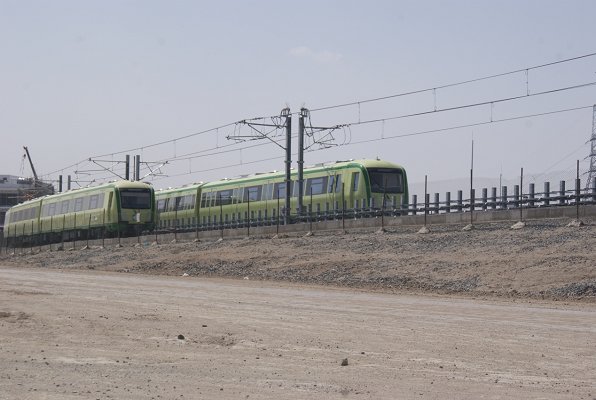
It was announced yesterday that Muslims wishing to use Makkah's first metro when they converge on the holy city next month for their annual pilgrimage will have to pay SR250 for a ticket that will serve them for seven days.
Three different types of tickets will cover all holy sites in Mecca and will allow the pilgrims to take the train into the city to perform their rites before returning to their residence inside or outside the city, Ajel online newspaper said, quoting Habib Zain Alabidin, Undersecretary at the Saudi Ministry of Municipal affairs.
"The ticket's price is set at SR250 (US$ 67) that will cover a full trip into and out of Makkah for seven days…another ticket is priced at SR100 (US$ 27) for four days," he said.
Officials said last week the train has a capacity to transport 170,000 passengers in its first stage and two million when the third and final phase is completed.
Saudi Arabia has allocated nearly SR6.7 billion (US$ 1.8 billion) for the metro, which begins continuous service next month for the first time in Mecca's history. Officials expect the project to largely contribute to easing road congestions caused by the accumulation of thousands of cars near Makkah.
Habib Zain Alabidin says the railway would operate throughout the year.
The project is part of a costly programme by Saudi Arabia to tackle massive traffic congestions in and around the city and facilitate access to all sacred sites in Mecca.
The train project, initiated three years ago, followed a series of incidents that have killed thousands of pilgrims in stampedes, building collapses and other accidents during the few days of the Haj season.
More than two million Muslims from Saudi Arabia, the Gulf Co-operation Council countries and other nations descend on Mecca every year to perform the pilgrimage.
China Railway Construction Corp, part of a Saudi-French-Chinese consortium which won the contract, is carrying out the project, involving nearly 5,000 workers. The train is the Gulf’s second metro system after the Dubai Metro.
by mail from
Farook Ali
It was announced yesterday that Muslims wishing to use Makkah's first metro when they converge on the holy city next month for their annual pilgrimage will have to pay SR250 for a ticket that will serve them for seven days.
Three different types of tickets will cover all holy sites in Mecca and will allow the pilgrims to take the train into the city to perform their rites before returning to their residence inside or outside the city, Ajel online newspaper said, quoting Habib Zain Alabidin, Undersecretary at the Saudi Ministry of Municipal affairs.
"The ticket's price is set at SR250 (US$ 67) that will cover a full trip into and out of Makkah for seven days…another ticket is priced at SR100 (US$ 27) for four days," he said.
Officials said last week the train has a capacity to transport 170,000 passengers in its first stage and two million when the third and final phase is completed.
Saudi Arabia has allocated nearly SR6.7 billion (US$ 1.8 billion) for the metro, which begins continuous service next month for the first time in Mecca's history. Officials expect the project to largely contribute to easing road congestions caused by the accumulation of thousands of cars near Makkah.
Habib Zain Alabidin says the railway would operate throughout the year.
The project is part of a costly programme by Saudi Arabia to tackle massive traffic congestions in and around the city and facilitate access to all sacred sites in Mecca.
The train project, initiated three years ago, followed a series of incidents that have killed thousands of pilgrims in stampedes, building collapses and other accidents during the few days of the Haj season.
More than two million Muslims from Saudi Arabia, the Gulf Co-operation Council countries and other nations descend on Mecca every year to perform the pilgrimage.
China Railway Construction Corp, part of a Saudi-French-Chinese consortium which won the contract, is carrying out the project, involving nearly 5,000 workers. The train is the Gulf’s second metro system after the Dubai Metro.
by mail from
Farook Ali
Friday, April 16, 2010
Top 10 Misconceptions About Islam
by The Duke Capone
10

Misconception: All Muslims are Arabs
The common image of a Muslim is a turbaned dark Arab man with a long beard. However this image is part of the minority of Muslims. Arabs make only 15% of the world’s Muslim population. As a matter of fact the Middle East comes in third with East Asia coming in at first (69%) and Africa (27%) coming in at second. Another common misconception is that all Arabs are Muslims. While the vast majority of Arabs are Muslims (75%), there are many other religions that Arabs practice including Christianity and Judaism.
9

Misconception: Muslims Hate Jesus
There are many similarities between the historical references of Christianity and Islam. Many people are amazed to find out that according to Muslim belief, Jesus is one of the greatest messengers of God. One cannot be a Muslim without believing in the virgin birth and the many miracles of Jesus Christ. Jesus is also mentioned in many verses of the Quran and is often used as an example of good virtue and character. However, the main difference between Christianity and Islam is that Muslims do not believe that Jesus was God. Pictured above is Jesus in an Islamic portrayal of the last judgement.
8

Misconception: Children have no rights
Children, according to Islamic law, have various rights. One of these is the right to be properly brought up, raised, and educated. Islam encourages children to be brought up well because it is the responsibility of an adult to raise his child to become a moral and ethical adult. Children must also be treated equally. When giving financial gifts they should all be the same amount and there should be no preference among them. Children are even permitted to take moderately from their parent’s wealth to sustain themselves if the parent declines to give them proper funds for living. A child is also not allowed to get hit in the face or hit by anything larger than a pencil.
Readmore : Top 10 Misconceptions About Islam

10
Muslims are Arabs

Misconception: All Muslims are Arabs
The common image of a Muslim is a turbaned dark Arab man with a long beard. However this image is part of the minority of Muslims. Arabs make only 15% of the world’s Muslim population. As a matter of fact the Middle East comes in third with East Asia coming in at first (69%) and Africa (27%) coming in at second. Another common misconception is that all Arabs are Muslims. While the vast majority of Arabs are Muslims (75%), there are many other religions that Arabs practice including Christianity and Judaism.
9
Muslims and Jesus

Misconception: Muslims Hate Jesus
There are many similarities between the historical references of Christianity and Islam. Many people are amazed to find out that according to Muslim belief, Jesus is one of the greatest messengers of God. One cannot be a Muslim without believing in the virgin birth and the many miracles of Jesus Christ. Jesus is also mentioned in many verses of the Quran and is often used as an example of good virtue and character. However, the main difference between Christianity and Islam is that Muslims do not believe that Jesus was God. Pictured above is Jesus in an Islamic portrayal of the last judgement.
8
Children’s Rights

Misconception: Children have no rights
Children, according to Islamic law, have various rights. One of these is the right to be properly brought up, raised, and educated. Islam encourages children to be brought up well because it is the responsibility of an adult to raise his child to become a moral and ethical adult. Children must also be treated equally. When giving financial gifts they should all be the same amount and there should be no preference among them. Children are even permitted to take moderately from their parent’s wealth to sustain themselves if the parent declines to give them proper funds for living. A child is also not allowed to get hit in the face or hit by anything larger than a pencil.
Readmore : Top 10 Misconceptions About Islam
Friday, March 26, 2010
Meaning of the Word 'Caliph'
Posted by Dr. Momin Sohil
The word 'Caliph' is the English form of the Arabic word 'Khalifa,' which is short for Khalifatu Rasulil-lah. The latter expression means Successor to the Messenger of God, the Holy Prophet Muhammad (peace be on him). The title 'Khalifatu Rasulil-lah'. was first used for Abu Bakr, who was elected head of the Muslim community after the death of the Prophet.
The Significance of the Caliphate
The mission of Prophet Muhammad (peace be on him), like that of the earlier messengers of God, was to call people to the worship of and submission to the One True God. In practice, submission to God means to obey His injunctions as given in the Holy Qur'an and as exemplified by Sunnah (the practice of the Prophet). As successor to the Prophet, the Caliph was the head of the Muslim community and his primary responsibility was to continue in the path of the Prophet. Since religion was perfected and the door of Divine revelation was closed at the death of the Prophet, the Caliph was to make all laws in accordance with the Qur'an and the Sunnah. He was a ruler over Muslims but not their sovereign since sovereignty belongs to God alone. He was to be obeyed as long as he obeyed God. He was responsible for creating and maintaining conditions under which it would be easy for Muslims to live according to Islamic principles, and to see that justice was done to all. Abu Bakr, at the time he accepted the caliphate, stated his position thus:
"The weak among you shall be strong with me until their rights have been vindicated; and the strong among you shall he weak with me until, if the Lord wills, I have taken what is due from them... Obey me as long as I obey God and His Messenger. When I disobey Him and His Prophet, then obey me not."
Subscribe to:
Posts (Atom)